
Setting Assessments
Assessing the setting of heritage assets is central to this work, drawing on the methodology of Historic England's Good Practice Advice Note 3 (GPA3) and the relevant case law. This experience includes setting assessments across a wide range of asset types, consistently distinguishing genuine contribution to significance from perceived or assumed harm.
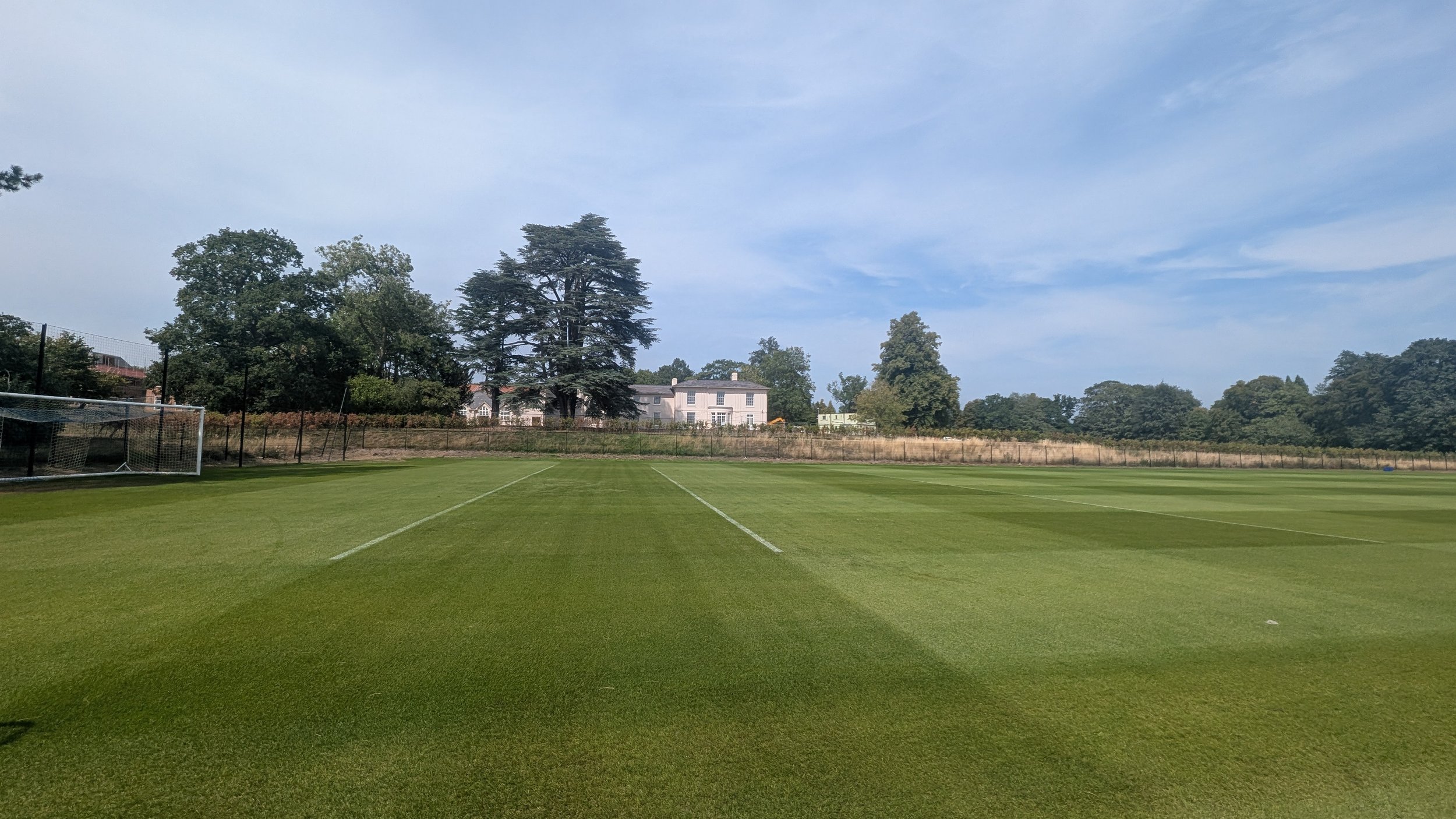
Relevant projects include a Heritage Statement for Birmingham City Football Club's Elite Performance and Innovation Centre in Warwickshire, where the assessment addressed the effect of a series of ancillary training-ground structures on the setting of an adjacent Grade II listed building — an early 19th century former asylum, now a school — and concluded that the proposals would cause no harm to its significance. A proposed classroom development at a primary school in Cambridgeshire required assessment of the setting of the adjacent Grade II* Church of St Andrew, a church of 13th and 14th century origin, again reaching a finding of no harm. A planning appeal in Buckinghamshire called for expert witness evidence addressing the setting of a Grade II listed house, grounded in GPA3 methodology and the Palmer and Barnwell Manor judgments.
Further experience includes a residential care scheme in Surrey involving the settings of several designated assets, including a Grade II* listed church and a Grade II listed house and lodge by the architect Sir Edwin Lutyens. Across these projects the approach has been rigorous and evidence-led, establishing how, and to what degree, setting contributes to the significance of each affected asset rather than assuming harm from proximity alone.
This experience also extends to the settings of designated assets affected by tall-building and major urban schemes, including work informed by the settings of listed buildings and registered landscapes in dense city contexts.